Why Understanding Current Boat Financing Rates Matters
Current boat financing rates typically range from 6.49% to 16.9% APR, depending on your credit score, the boat’s age, and your loan term. Here’s what you need to know right now:
Quick Rate Overview:
- New boats: As low as 6.95% APR
- Used boats: Starting around 7.45% APR
- Excellent credit (740+): Average 8.03% APR
- Good credit (670-739): Average 9.78% APR
- Fair/poor credit (below 669): Average 11.6% APR
If you’ve been dreaming about cruising Lake Texoma on a new Suncatcher pontoon or casting lines from a Skeeter bass boat at Table Rock Lake, understanding boat financing rates is your first step toward making that dream real.
The good news? Boat financing is more accessible than many people think. You don’t need to pay cash upfront for a quality vessel from brands like G3, Lowe, or SeaArk. With the right financing, a new boat can cost around $250 per month, while a personal watercraft might run as low as $125 per month.
But here’s what matters most: that advertised “low rate” isn’t the whole story. Your actual rate depends on several factors working together—your credit score, how much you put down, the loan term you choose, and whether you’re buying new or used.
The boat financing market has shifted recently. While rates have increased from the historic lows of a few years ago, they have started to stabilize and, in some cases, trend downward. For families and fishing enthusiasts in Oklahoma and Missouri, this creates a real opportunity to secure competitive financing on reliable boats built to last.
At Blackbeard Marine, we’ve helped hundreds of boaters steer these waters. Whether you’re looking at a family-friendly Lowe pontoon or a high-performance Blazer Bay bay boat, understanding current rates helps you budget realistically and negotiate confidently.
What Are the Current Boat Financing Rates?
Understanding the economic landscape is crucial when diving into boat financing. Just like the tides, interest rates are influenced by broader economic currents, and recent years have seen their share of shifts. While specific rates can vary widely, we’ve observed a general trend of rates as low as 6.24% APR for those with excellent credit, though they can climb significantly higher depending on your financial profile and the type of loan you secure.
Boat financing is generally considered a higher risk by lenders compared to, say, car financing. This often means boat loan interest rates can be a bit higher than what you might expect for an automobile, reflecting that perceived risk. However, the good news is that after a period of increases, boat loan rates have been trending downward, making it a more opportune time to consider your purchase.
When we talk about current boat financing rates, it’s helpful to look at average APRs across different credit score tiers. These averages give us a realistic benchmark for what to expect:
| Credit Score Tier | FICO Score Range | Average APR |
|---|---|---|
| Excellent Credit | 740+ | 8.03% |
| Good Credit | 670-739 | 9.78% |
| Fair/Poor Credit | Below 669 | 11.6% |
Rates are approximate and can vary by lender and loan specifics.
For new boats, we’ve seen rates advertised as low as 6.95% APR. If you’re eyeing a brand-new Suncatcher pontoon or a fresh G3 fishing boat, these competitive rates can make ownership surprisingly accessible. Used boats typically start a little higher, with rates as low as 7.45% APR. However, the final rate you receive is always a blend of many factors, not just whether the boat is new or used. High-quality brands like Skeeter and Lowe are known for their value retention, which can sometimes work in your favor, even for a pre-owned vessel.
When you see “as low as” rates advertised, it’s a good idea to remember that these are usually reserved for borrowers with excellent credit profiles and often come with specific loan terms or conditions. They represent the best-case scenario, and while achievable for many, they aren’t guaranteed for everyone.
To learn more about how rates for pre-owned vessels differ and what to expect, we invite you to explore our comprehensive guide on More info about used boat loan rates.
Key Factors That Steer Your Interest Rate
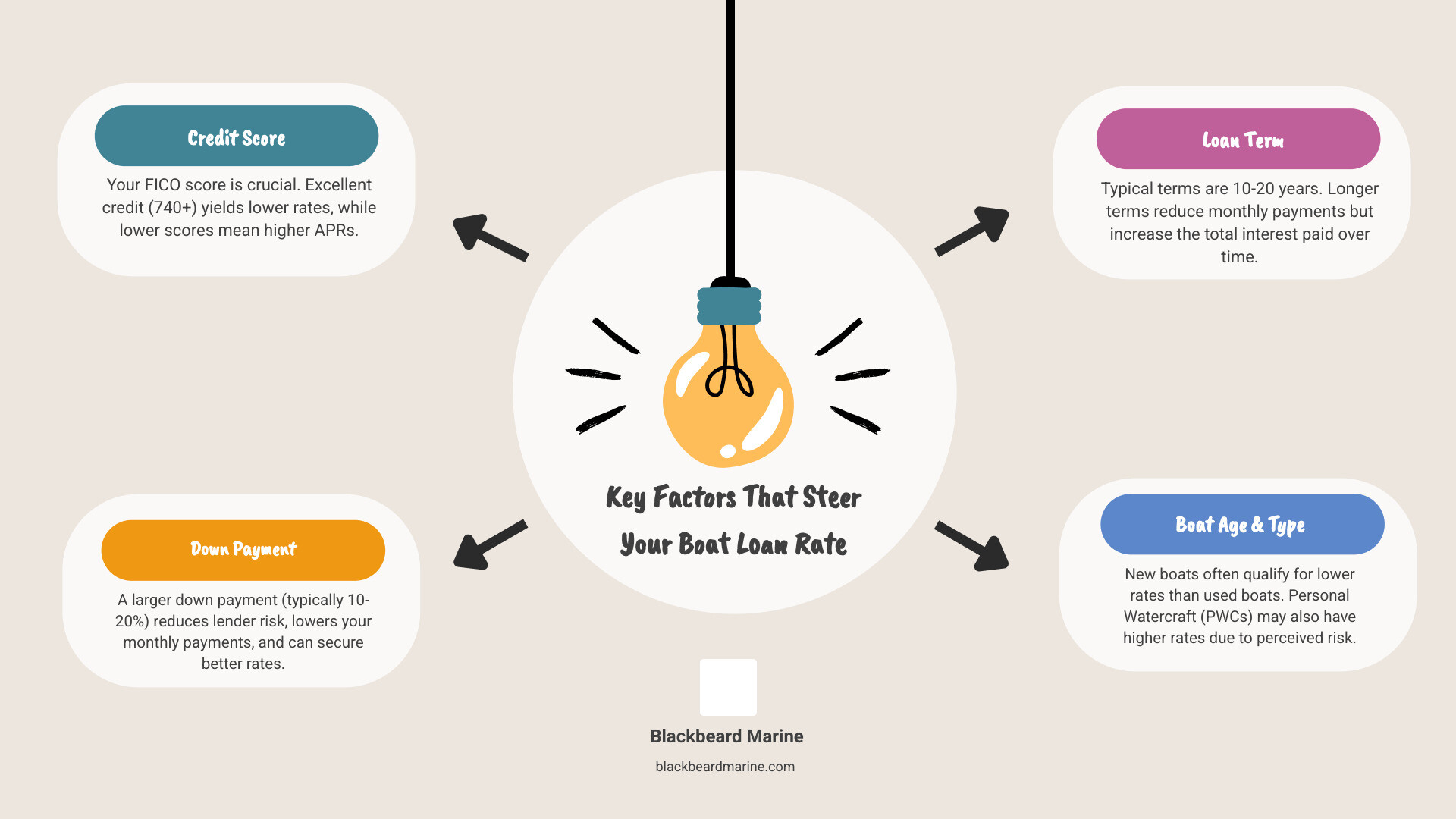
When we apply for a loan, we’re essentially asking a lender to take a calculated risk on our ability to repay. To assess this risk, lenders look at a variety of factors, each playing a crucial role in determining the interest rate you’ll receive. Think of it like a boat’s captain assessing the weather, currents, and vessel condition before setting sail—every detail matters for a smooth journey.
Your Credit Score: The Captain of Your Rate
Your credit score is arguably the most influential factor in securing a favorable boat loan rate. It’s a numerical representation of your creditworthiness, reflecting your history of borrowing and repaying debts. Lenders use it to quickly gauge how reliable you are as a borrower.
Generally, the higher your FICO score, the lower your interest rate will be. Borrowers with excellent credit scores, typically 700 or above, will qualify for the most competitive rates. If your score is in the upper 600s, you might still qualify, but you can expect slightly higher rates. For those with a credit score of 600 or below, securing a boat loan can be more challenging, and the rates offered will likely be significantly higher, reflecting the increased risk for the lender.
But don’t despair if your credit isn’t perfect! We understand that life happens. Even with imperfect credit, there are still options available, though they might involve a higher down payment or a different type of lender. The key is to be transparent and explore all your avenues. If you’re concerned about your credit history, we have resources to help you steer these waters. Learn more about financing with poor credit.
Down Payment: Your Anchor Against High Rates
The down payment is the initial amount of money you pay upfront for your boat. It acts like an anchor, providing stability and significantly influencing your loan terms. A typical down payment for a boat loan ranges from 10% to 20% of the boat’s purchase price.
Why is a substantial down payment so important?
- Reduces Lender Risk: By putting more money down, you reduce the amount the lender needs to finance, lowering their risk. This often translates to a lower interest rate for you.
- Lowers Monthly Payments: A larger down payment means a smaller loan amount, which directly results in lower monthly payments, making your boat ownership more affordable.
- Mitigates Depreciation: Boats, like cars, can depreciate over time. A good down payment helps ensure you don’t owe more on your boat than it’s worth, preventing you from being “upside down” on your loan. This is especially important for more expensive vessels, where we often recommend aiming for a 20% down payment.
Loan Term & Amortization: Charting Your Repayment Course
The loan term refers to the length of time you have to repay your loan, while amortization is the process of paying off the debt through regular payments over that term. For boat loans, typical terms can range from 10 to 20 years, with some lenders offering up to 240 months (20 years) for newer vessels.
Choosing the right loan term involves balancing your monthly budget with the total interest you’ll pay over the life of the loan:
- Longer Terms (e.g., 15-20 years): These result in lower monthly payments, making boat ownership more accessible and manageable on a month-to-month basis. However, because you’re paying interest for a longer period, the total amount of interest paid over the life of the loan will be higher.
- Shorter Terms (e.g., 5-10 years): These lead to higher monthly payments but significantly reduce the total interest paid, saving you money in the long run.
Amortization means that in the early years of your loan, a larger portion of your monthly payment goes towards interest, and a smaller portion reduces the principal balance. As the loan matures, this ratio shifts, with more of your payment going towards the principal. Understanding this can help you decide if making extra payments early on is a smart move for your financial situation.
The Boat Itself: Age, Value, and Type
The characteristics of the boat you’re looking to finance also play a significant role in determining your interest rate and loan terms.
- New vs. Used Boats: New boats generally qualify for slightly lower interest rates and longer loan terms compared to used boats. This is because new vessels typically have a higher initial value and are seen as less of a risk for lenders. However, well-maintained used boats from reputable brands like Seaark and Blazer Bay can hold their value exceptionally well, often still qualifying for competitive rates.
- Loan Limits Based on Value: Lenders will assess the boat’s book value and condition to determine the maximum loan amount they are willing to offer. This helps protect both you and the lender.
- Type of Boat: The kind of vessel you’re financing can also influence rates. For instance, personal watercraft (PWCs) like jet skis might sometimes carry slightly higher interest rates due to a perceived higher lender risk compared to larger, more traditional boats.
When considering a boat, whether it’s a new pontoon for family fun on Lake Texoma or a high-performance fishing boat for tournaments on Table Rock Lake, it’s wise to get an estimate of your potential rates. You can Check out current boat loan rates to get a better idea of what to expect.
Navigating Different Boat Loan Options
Just as there are many types of boats, there are also various ways to finance your dream vessel. Understanding these options is key to finding the best fit for your budget and lifestyle. At Blackbeard Marine, we want to help you make an informed decision so you can spend less time worrying about finances and more time enjoying the waters of Oklahoma and Missouri.
Secured vs. Unsecured Loans
One of the fundamental distinctions in boat financing is between secured and unsecured loans:
- Secured Loans: This is the most common type of boat loan. With a secured loan, the boat itself serves as collateral. This means if you fail to make your payments, the lender has the right to repossess the boat. Because the lender has this collateral, they face less risk, which typically translates to lower interest rates and longer repayment terms for you. Most traditional boat loans, especially for larger purchases like a G3 or Skeeter fishing boat, are secured.
- Unsecured Personal Loans: These loans do not require any collateral. They are based solely on your creditworthiness. While they offer flexibility (since your boat isn’t directly tied to the loan), they come with higher interest rates and shorter repayment terms due to the increased risk for the lender. An unsecured loan might be an option for a smaller boat purchase or personal watercraft if you prefer not to use the vessel as collateral.
Each option has its advantages and disadvantages, and the best choice depends on your financial situation and preferences. To dive deeper into these choices, you can Explore your financing options.
Where to Get Your Loan: Banks, Credit Unions, and Marine Lenders
You have several avenues for securing a boat loan, each with its own characteristics:
- Banks: Traditional banks offer boat loans, often with competitive rates for borrowers with excellent credit. They typically have stringent credit requirements and may offer different rates for personal loans versus asset-backed loans.
- Credit Unions: Often known for their member-centric approach, credit unions can sometimes offer more flexible terms and competitive rates, especially if you’re an existing member. They may have more relaxed requirements than larger banks and often provide personalized service.
- Specialized Marine Lenders: These lenders focus exclusively on boat and marine financing. They often have a deeper understanding of the boating market, which can translate into more custom loan products, potentially for a wider range of boat types or ages.
- Dealership Financing: Many dealerships, including Blackbeard Marine, offer convenient in-house financing options or work directly with a network of lenders. This can streamline the purchase process, allowing you to handle the financing and boat purchase all in one place. We often have access to competitive rates and terms, and our finance experts can guide you through the paperwork efficiently.
- Manufacturer Promotions: Occasionally, boat manufacturers like Suncatcher or Lowe might offer special promotional financing rates, especially for new models. While these can be very attractive, it’s crucial to read the fine print, as these rates might be introductory and could increase after an initial period.
Understanding Fixed vs. Variable Current Boat Financing Rates
When you secure a boat loan, you’ll typically encounter two main types of interest rates:
- Fixed-Rate Loans: With a fixed-rate loan, your interest rate remains the same for the entire duration of your loan term. This means your monthly payments for the principal and interest will be predictable and won’t change. Fixed rates offer stability and peace of mind, allowing you to budget confidently without worrying about market fluctuations affecting your payments. Many borrowers prefer fixed rates for this very reason.
- Variable-Rate Loans: A variable-rate loan’s interest rate can change over time, typically tied to a benchmark like the prime rate. If the prime rate goes up, your interest rate and monthly payments will increase; if it goes down, your payments will decrease. While variable rates can sometimes start lower than fixed rates, they introduce an element of uncertainty. They might be appealing if you anticipate interest rates falling or if you plan to pay off your loan quickly. However, they carry the risk of higher payments if rates rise.
Choosing between fixed and variable rates depends on your comfort level with risk and your financial outlook. We’re here to discuss both options and help you determine which best suits your boating dreams on Lake Texoma or Table Rock Lake.
Beyond the Monthly Payment: The Total Cost of Boat Ownership
Securing a great rate on your G3 fishing boat or Suncatcher pontoon is a fantastic first step, but it’s crucial to remember that the loan payment is just one piece of the boat ownership puzzle. To truly enjoy your time on the water, whether it’s fishing the abundant waters of Lake Texoma or cruising with family on Table Rock Lake, we need to consider the total cost of ownership. Overlooking these additional expenses can quickly turn a dream into a financial headache.
Here are the key costs beyond your loan payment that every boat owner should budget for:
- Insurance Requirements: Just like with a car, boat insurance is a non-negotiable expense. Lenders typically require comprehensive marine insurance to protect their collateral (your boat) against damage, theft, or liability. Marine insurance differs significantly from auto insurance and often requires specialized underwriters. The cost will vary based on your boat’s value, type (e.g., high-performance Blazer Bay vs. a utility Lowe), where it’s stored, and your boating experience.
- Annual Maintenance: Boats require regular upkeep to stay in top condition. This includes engine tune-ups, winterization (especially in Missouri), cleaning, hull maintenance, and occasional repairs. Skipping maintenance can lead to larger, more expensive problems down the line. Budgeting for annual servicing, perhaps with our expert team at Blackbeard Marine, is a smart move.
- Storage and Docking Fees: Unless you have dedicated space at home, you’ll need to consider where to keep your boat. This could involve annual storage fees for winter, or monthly docking fees if you keep your boat in a marina on Lake Texoma or Table Rock Lake. These costs can vary significantly based on location, boat size, and facility amenities.
- Fuel Costs: Boats, especially larger models or high-performance engines, can be thirsty. Your fuel consumption will depend on how often you use your boat, the engine type, and current fuel prices. It’s a variable cost that can add up quickly during a busy season.
- State Registration and Taxes: You’ll need to register your boat with your state (Oklahoma or Missouri), and there may be annual registration fees. Additionally, sales tax on the purchase price is a one-time cost that might be rolled into your loan or paid separately.
To help you get a clear picture, here’s a list of common boat ownership costs beyond the loan:
- Boat Insurance Premiums
- Routine Engine Maintenance (oil changes, spark plugs, etc.)
- Winterization and De-winterization Services
- Hull Cleaning and Waxing
- Storage (dry storage, wet slip, or covered storage)
- Docking Fees (if applicable)
- Fuel
- Safety Equipment (life jackets, flares, first-aid kit)
- Fishing Licenses (if applicable)
- State Registration Fees
- Sales Tax (initial purchase)
- Unexpected Repairs (e.g., propeller damage, electrical issues)
- Accessories and Upgrades (e.g., new electronics, fishing gear for your Skeeter)
By factoring in these expenses from the outset, you can create a realistic budget and ensure your boat ownership journey is filled with joy, not financial stress.
Frequently Asked Questions about Boat Financing
We understand that diving into boat financing can bring up a lot of questions. Here are some of the most common inquiries we hear from our customers in Oklahoma and Missouri, along with our expert answers to help you steer your options.
What is a typical down payment for a boat loan?
For most boat loans, a typical down payment ranges from 10% to 20% of the boat’s purchase price. This percentage can vary depending on the lender, your credit score, and the age and value of the boat. For instance, a new Suncatcher pontoon might require a lower percentage down than an older used vessel.
Making a larger down payment offers several significant benefits:
- Lower Interest Rate: A larger down payment reduces the amount you need to borrow, which often makes you a less risky borrower in the eyes of lenders, potentially qualifying you for a lower interest rate.
- Reduced Monthly Payment: With a smaller loan amount, your monthly payments will be lower and more manageable, freeing up your budget for other boating essentials or experiences on Lake Texoma.
- Mitigated Depreciation: A substantial down payment helps you avoid owing more than your boat is worth, especially if depreciation occurs. This is a smart financial move to protect your investment.
While some lenders might offer “zero-down” boat loans, particularly for borrowers with excellent credit, we generally advise putting down at least 10% to secure more favorable terms and a healthier financial position.
How long can you finance a new or used boat?
The loan terms for boat financing are typically quite flexible, often extending much longer than car loans, reflecting the significant investment a boat represents. For both new and used boats, common loan terms range from 10 to 20 years (120 to 240 months). Some lenders might even offer terms up to 21 years for specific conditions.
The exact term length you qualify for will depend on several factors:
- Loan Amount: Larger loan amounts, especially for high-value boats like a new Blazer Bay or a well-equipped Skeeter, often come with longer repayment periods to make monthly payments affordable.
- Boat Age: While new boats generally qualify for the longest terms, many lenders will finance used boats for terms up to 20 years minus the boat’s age. For example, a 5-year-old boat might qualify for a 15-year term.
- Lender Policies: Different lenders have different maximum term limits. Specialized marine lenders or dealerships (like Blackbeard Marine) often have access to longer terms than traditional banks.
- Your Credit Score: A strong credit profile can open the door to longer, more flexible terms.
Choosing a longer term can make monthly payments more manageable, but it also means you’ll pay more in total interest over the life of the loan. Conversely, a shorter term has higher monthly payments but reduces your overall interest cost. It’s about finding the balance that works for your budget and financial goals.
How can I calculate my potential monthly boat payment?
Estimating your potential monthly boat payment is a crucial step in budgeting and understanding the total cost of financing. This is where an online boat loan calculator becomes your best friend. These tools are straightforward and incredibly helpful for planning.
To use a boat loan calculator, you’ll typically need to input three key pieces of information:
- Loan Amount: This is the total amount you plan to borrow after your down payment.
- Interest Rate (APR): Use an estimated current boat financing rate based on your credit score and the type of boat you’re considering.
- Loan Term: Select your desired repayment period in months or years (e.g., 180 months for 15 years).
Once you input these details, the calculator will instantly provide an estimate of your monthly payment. Many calculators also break down the total interest you’ll pay over the life of the loan, giving you a clearer picture of the overall financing cost. This allows you to play with different scenarios—adjusting the down payment, term, or even the boat’s price—to see how it impacts your monthly budget.
While these calculators provide estimates, they are invaluable for comparing different options and ensuring your dream boat fits comfortably within your financial plan. Many lenders offer these tools on their websites.
Conclusion: Set Sail on Your Ownership Journey
Navigating current boat financing rates might seem complex at first, but with the right knowledge and guidance, it’s a clear path to owning your dream vessel. We’ve explored how factors like your credit score, down payment, loan term, and even the type and age of the boat all play a crucial role in determining the interest rate you’ll receive. We’ve also highlighted the various financing options available, from secured bank loans to flexible dealership financing, and the importance of understanding fixed versus variable rates.
The journey to boat ownership extends beyond just the loan payment. Budgeting for insurance, maintenance, storage, and fuel will ensure your time on the water is truly worry-free. Thorough research into all these aspects is crucial for a smooth voyage.
Whether your dream is to cast lines from a G3 fishing boat at sunrise on Table Rock Lake, enjoy family tubing adventures on a Lowe pontoon on Lake Texoma, or experience the thrill of a Blazer Bay bay boat, understanding your financing options is the first step to making it a reality.
At Blackbeard Marine, we are passionate about helping boaters in Oklahoma and Missouri steer these waters. Our finance experts are dedicated to finding the best financing solutions for your dream boat, ensuring you get competitive rates and terms that fit your budget. We’re here to guide you through every step, from selecting the perfect Skeeter bass boat to securing the ideal loan.
Don’t let the complexities of financing keep you stranded on shore. The open water awaits!