Your Dream Boat is Within Reach
Bad credit boat loans make it possible to finance a new or used boat even if your credit score isn’t perfect. Here’s what you need to know right away:
Quick Facts About Bad Credit Boat Loans:
- Minimum Credit Score: Most lenders accept scores as low as 550-600
- Interest Rates: Expect rates between 9.95% and 19.95%
- Down Payment: Typically 10-20% of the boat’s purchase price
- Loan Terms: Usually 10-15 years for bad credit borrowers
- Key Lenders: Credit unions, marine financing specialists, and dealerships like Blackbeard Marine
You’ve been dreaming about cruising Lake Texoma or fishing on Table Rock Lake in a G3, Lowe, or Skeeter boat. You might be putting it off because you think your credit score is holding you back. Here’s the truth: bad credit doesn’t mean no boat.
A credit score below 680 can make boat financing more challenging, but specialized marine lenders understand that past financial setbacks don’t define your future. They look at your entire financial picture, including your income and down payment.
This guide will walk you through securing boat financing with less-than-perfect credit. We’ll cover how these loans work, what lenders expect, and how to improve your approval odds. Whether you’re eyeing a family-friendly Suncatcher pontoon or a high-performance Blazer Bay fishing boat, we’ll help you get on the water.

Understanding Bad Credit Boat Loans and What to Expect
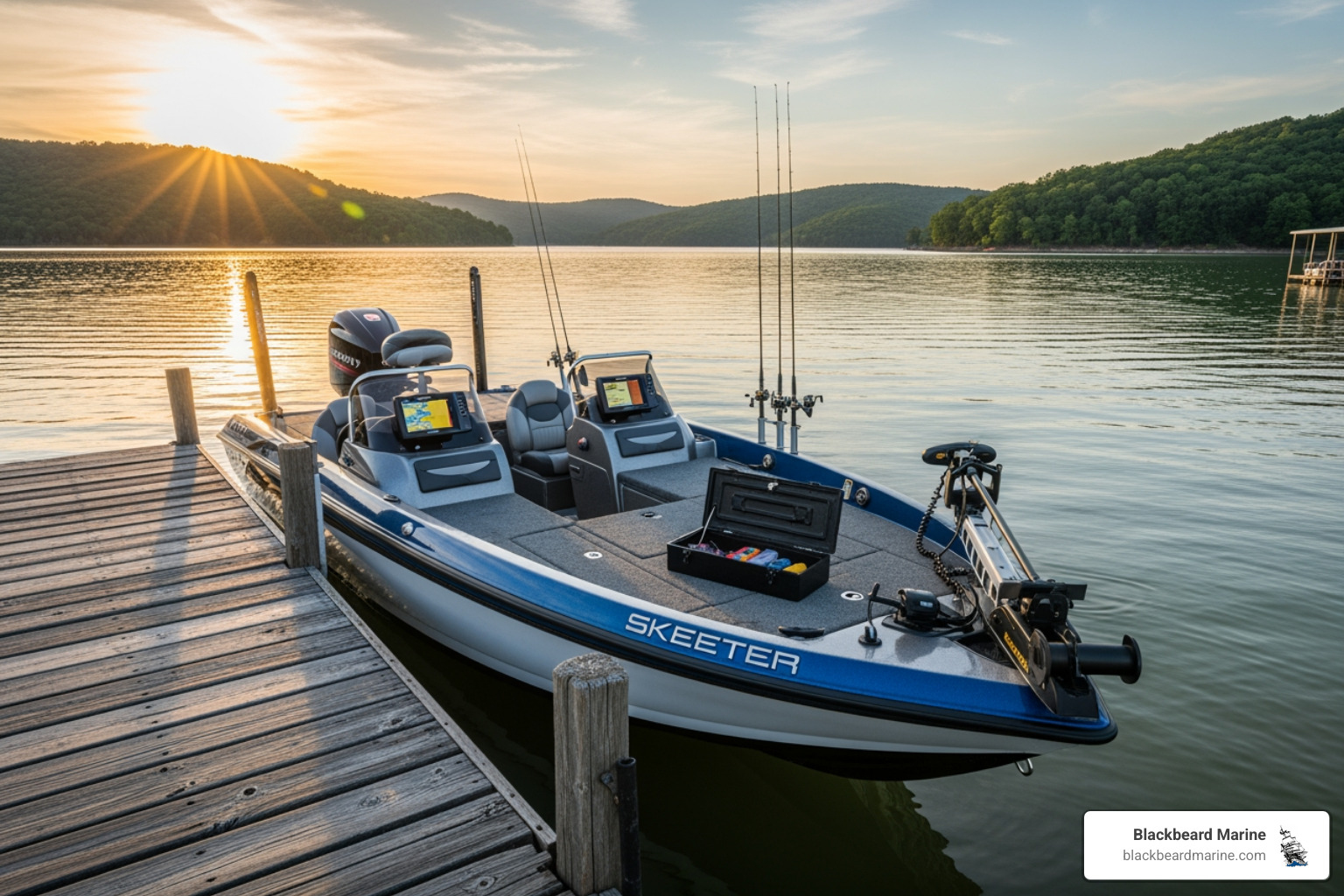
Bad credit boat loans are designed for people with credit scores below the 680 mark that traditional lenders prefer. They acknowledge that your past doesn’t have to determine your future on the water.
Most boat loans—especially for brands like G3, Lowe, and Skeeter—are secured loans. This means the boat itself acts as collateral. If you can’t make payments, the lender can repossess the boat. While this is a risk, it’s also why lenders can offer better terms. Because the loan is secured, you’ll find lower interest rates and longer repayment periods, making ownership more affordable. Unsecured loans, which don’t require collateral, are rare in boat financing and come with much higher interest rates.
Here are the numbers you need to know:
- Interest rates for bad credit boat loans typically range from 9.95% to 19.95%. Your specific rate depends on your credit profile and down payment.
- Loan terms usually stretch between 10 and 15 years. This longer timeline helps keep monthly payments manageable.
So, where do you find these loans? Dealership financing is often your best starting point. At Blackbeard Marine, our finance team works with a network of lenders who specialize in various credit situations. We do the heavy lifting to connect you with the right partner. Beyond dealerships, credit unions and specialized marine financing companies are also worth exploring, as they often have more flexible criteria than traditional banks.
And yes, you can absolutely finance a used boat with bad credit. A pre-owned Lowe fishing boat or a gently used Suncatcher pontoon costs less, meaning you borrow less. Most lenders will finance used boats up to 10 or 15 years old, depending on their condition. For more details, check out our guide on used boat loan rates.
The bottom line is that bad credit boat loans work. Understanding the collateral, preparing for the interest rates, and knowing where to look puts you miles ahead in the process.
Boosting Your Approval Odds: A Step-by-Step Strategy

Getting approved for a bad credit boat loan is about preparation, not luck. You have more control over this process than you might think.
Most lenders offering these loans look for a minimum credit score of 550 to 600. If your score is in this range, you’re in the conversation. But two factors can dramatically improve your application:
A Strong Down Payment: This is your most powerful tool. While the standard is 10% to 20%, putting down more (like 25%) tells lenders you’re serious, reduces their risk, and can open up better interest rates. Think of it as buying yourself better loan terms.
A Co-signer: A co-signer with good credit who shares responsibility for the loan can be a game-changer. It can be the difference between denial and approval, and often secures a much lower interest rate on your bad credit boat loan.
How to improve your chances for bad credit boat loans
Beyond those big moves, take these practical steps to strengthen your financial profile before you apply:
Review Your Credit Report: Get your free report from Get your free credit report from the only government-approved site and dispute any errors. A quick correction could boost your score.
Reduce Your Debt: Lenders look at your debt-to-income ratio. Paying down credit card balances or other small loans shows you’re managing your money responsibly and improves this key metric.
Prove Income Stability: Lenders want to see consistent, reliable income. Be prepared to show recent pay stubs, tax returns, or bank statements to prove you have steady cash flow.
Getting approved for that Suncatcher pontoon or G3 fishing boat isn’t about having perfect credit. It’s about showing lenders you’re a prepared, committed, and responsible borrower.
Preparing Your Application for Success

Preparing your bad credit boat loan application is like prepping your boat for a day on Lake Texoma. A little organization makes the process smooth.
First, understand your Debt-to-Income (DTI) ratio—your total monthly debt payments divided by your gross monthly income. Lenders prefer a DTI below 50%. Before applying, also budget for the total cost of ownership: insurance, maintenance, storage, fuel, and registration fees. Showing a lender you’ve planned for these expenses demonstrates financial responsibility.
Next, get pre-qualified. This is a quick process with a soft credit check that won’t affect your score. It gives you a ballpark idea of what you can afford. Once you’re ready to shop seriously, you can get pre-approved, which involves a hard credit inquiry but gives you a firm loan amount. This lets you shop for your SeaArk or Blazer Bay with confidence.
Finally, research the value of the boats you’re interested in using resources like NADA Guides. Knowing what a used Lowe fishing boat or a new Suncatcher pontoon is worth helps you negotiate a fair price and request the right loan amount.
What documentation is needed for bad credit boat loans?
Having your paperwork organized is half the battle. Gather these documents before you apply:
- Proof of income: Recent pay stubs, W-2s, and tax returns for the past two years.
- Government-issued ID: Your driver’s license or state ID.
- Proof of residence: A recent utility bill or mortgage statement.
- Bank statements: From the last few months to show cash flow.
- Boat purchase agreement: Details on the Suncatcher, G3, Lowe, Seaark, Skeeter, or Blazer Bay you intend to buy.
Having these ready shows lenders you’re serious and organized. Our finance team at Blackbeard Marine can walk you through exactly what’s needed to make the process as simple as possible.
Navigating Risks, Rejection, and Other Considerations
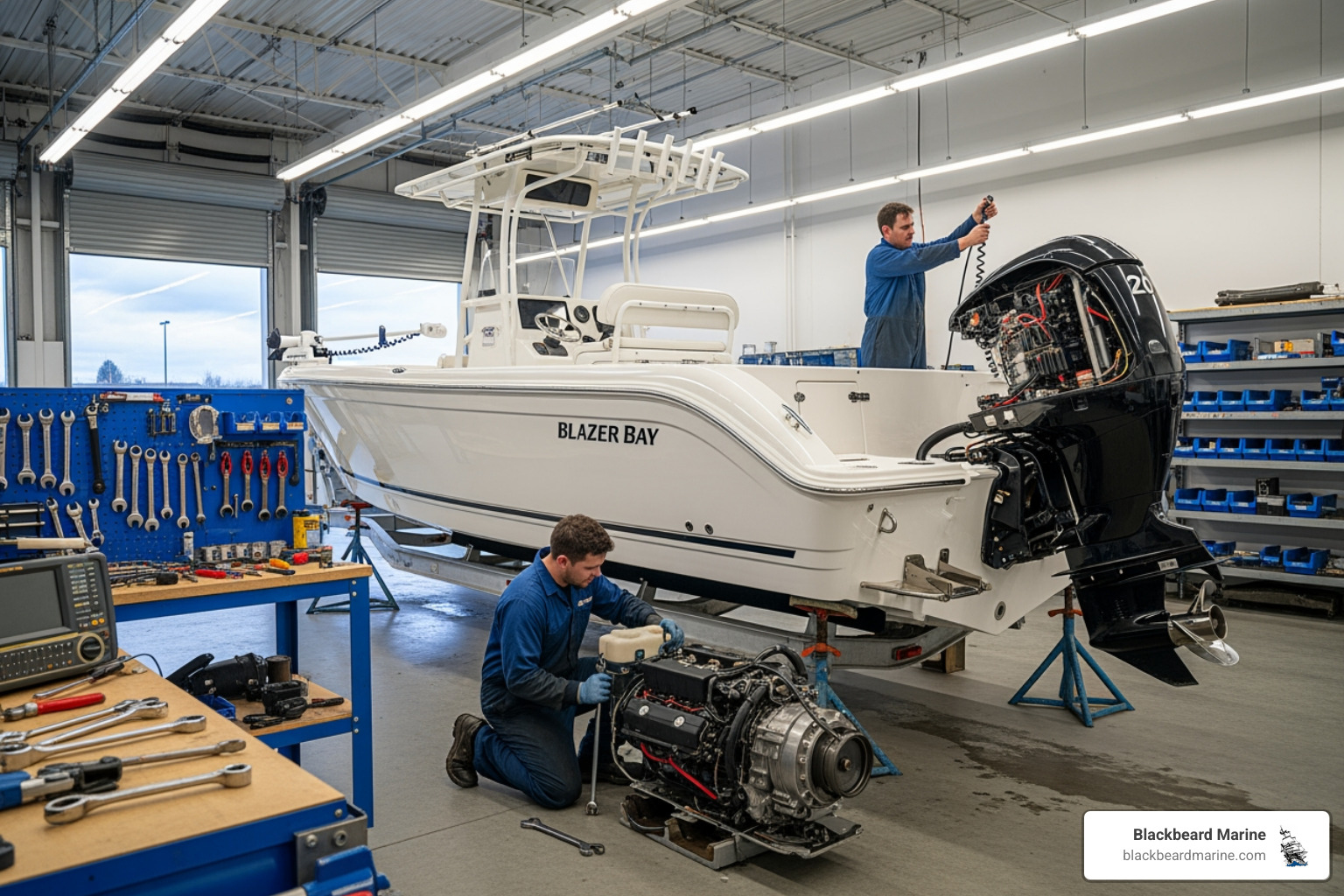
Securing a bad credit boat loan opens the door to ownership, but it’s important to steer the potential challenges.
The most significant factor is higher interest rates, which can range from 9.95% to 19.95%. Over a 10 or 15-year loan, this adds up to thousands in extra interest, so ensure the monthly payment fits comfortably in your budget.
Another risk is negative equity, which happens when your boat’s value drops faster than you pay down the loan. You could end up owing more than the boat is worth. A substantial down payment (15-20% or more) is the best protection against this.
Remember to budget for ongoing ownership costs. Your loan payment is just the start. You’ll also have mandatory insurance, regular maintenance, storage, fuel for trips on Lake Texoma, and annual registration fees. Factoring these into your budget is crucial for responsible ownership.
What to do if your loan application is rejected
A rejection isn’t a permanent “no”—it’s a “not yet.” Here’s how to respond:
Review the rejection reasons. Lenders must tell you why they said no. Use this feedback as your roadmap for improvement.
Work on the issues. Spend a few months paying down debt, making on-time payments, or saving for a larger down payment. Don’t immediately re-apply without making changes, as multiple hard inquiries can lower your score.
Consider alternatives. If traditional financing isn’t working, you have other options. You could save for a cash purchase to avoid interest entirely. A home equity loan (HELOC) might offer lower rates, but it puts your house at risk and requires careful consideration. You could also explore co-ownership with a trusted friend or family member to split the costs.
A rejection is a detour, not a dead end. With patience and the right strategy, you can still get into that Lowe fishing boat or G3 pontoon.
Frequently Asked Questions about Boat Financing
Can I get a boat loan with a 550 credit score?
Yes, getting a bad credit boat loan with a 550 credit score is possible with some specialized lenders, but you need to be prepared. Expect interest rates toward the higher end of the 9.95% to 19.95% range. To strengthen your application, you’ll need a significant down payment (15-20% is ideal), a low debt-to-income ratio, and proof of stable income. A co-signer with good credit can dramatically improve your approval odds and help you secure better terms. Our finance team at Blackbeard Marine has experience helping customers in this exact situation.
How long can you finance a used boat with bad credit?
For used boats, bad credit boat loans typically offer terms up to 15 years. However, the boat’s age is a critical factor. Lenders are hesitant to finance boats older than 10-15 years, and they will likely offer shorter terms for older models. For example, a 3-year-old Suncatcher pontoon might get a 15-year term, while a 10-year-old Lowe fishing boat may be limited to 8 or 10 years. A longer term lowers your monthly payment but means you’ll pay more in total interest.
Does applying for multiple boat loans hurt my credit?
Yes, applying for multiple loans can hurt your credit if done incorrectly. Each formal application triggers a “hard inquiry,” which can temporarily lower your score. The smart strategy is to get pre-qualified first. Pre-qualification uses a “soft check” that doesn’t impact your credit score, allowing you to compare estimated offers from different lenders. Once you’ve chosen the best option, you proceed with just one full application. At Blackbeard Marine, our finance team can manage this process for you, minimizing credit inquiries while finding the best available terms for your new SeaArk or Blazer Bay.
Set Sail with Confidence
Your dream of cruising Lake Texoma in a Suncatcher pontoon or fishing from a Blazer Bay on Table Rock Lake is within reach. Even with a less-than-perfect credit score, bad credit boat loans make ownership possible.
Remember the keys to success:
- Preparation is your secret weapon. Review your credit, reduce debt, and gather your financial documents.
- A solid down payment is your best tool. Aim for 10-20% or more to show lenders you’re committed and to secure better terms.
- You have options. Specialized marine lenders, credit unions, and the experienced finance team at Blackbeard Marine are here to help.
The joy of boating—watching the sunset from a G3, tubing behind a Skeeter, or relaxing on a Lowe pontoon—is an experience you deserve. Past financial challenges shouldn’t keep you from creating new memories on the water.
Take the first step. You have the knowledge and you understand the process. Now, let’s make it happen.