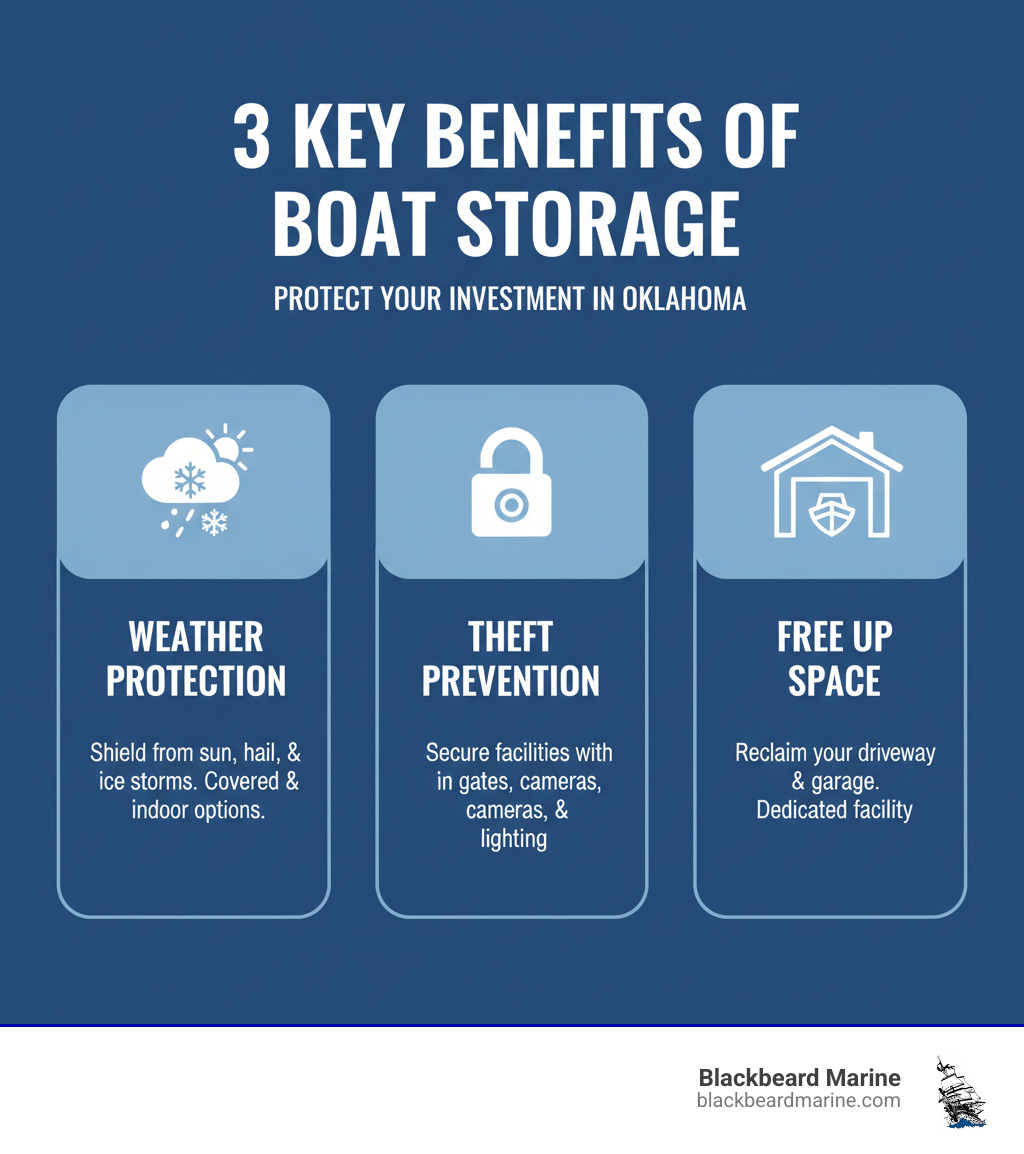
Why Proper Boat Storage Matters for Oklahoma Boaters
Boat Storage Oklahoma offers several options to protect your investment and keep your vessel ready for the water. Here’s what you need to know:
Quick Answer: Top Storage Options in Oklahoma
- Indoor Storage: Maximum protection from weather, theft, and pests (most expensive)
- Covered Outdoor: Good weather protection at moderate cost
- Uncovered Outdoor: Most affordable, suitable for short-term storage
- Marina Slips: Convenient for frequent boaters near lakes like Texoma and Grand Lake
- Dry Stack: Space-efficient indoor storage at marinas
Average Unit Sizes: 10×20 for smaller fishing boats, 12×40+ for pontoons and larger vessels
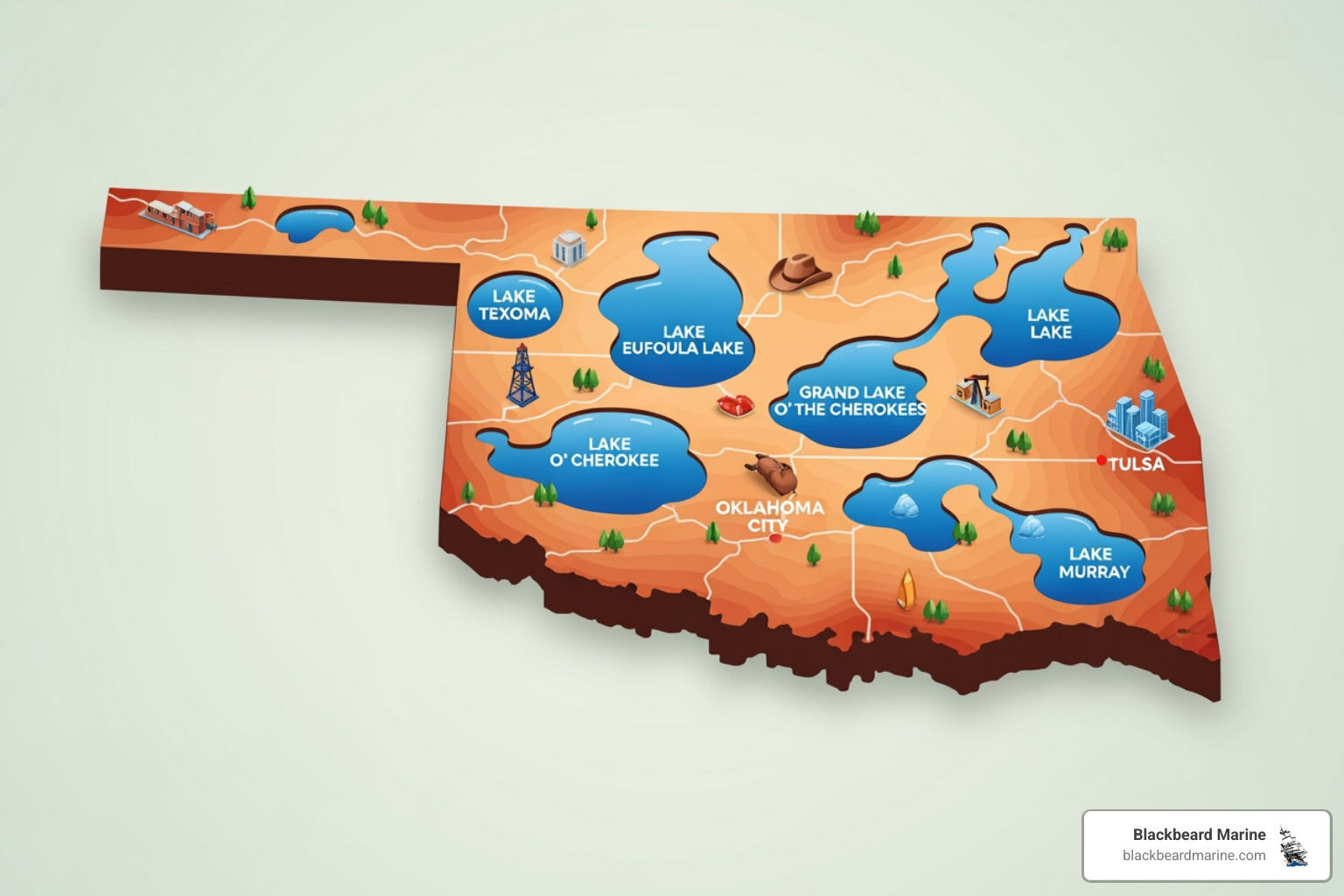
Oklahoma’s stunning lakes—from Texoma to Grand Lake to Eufaula—make it a boater’s paradise. But when you’re not on the water, your boat is a serious investment that needs protection. Proper storage for your Suncatcher pontoon or Skeeter fishing boat shields it from Oklahoma’s harsh weather, including intense sun, hailstorms, and damaging ice storms.
Beyond weather, secure storage prevents theft, vandalism, and pests that can damage engine components. It also frees up your driveway, keeping your property neat and accessible. This guide covers your storage options, costs, security features, and preparation tips to keep your vessel shipshape between adventures.
Types of Boat Storage Available in Oklahoma
When you’re not enjoying Oklahoma’s lakes, your boat needs a safe home. You have plenty of options for Boat Storage Oklahoma, whether you’re protecting a Blazer Bay fishing boat or a family-friendly Suncatcher pontoon.
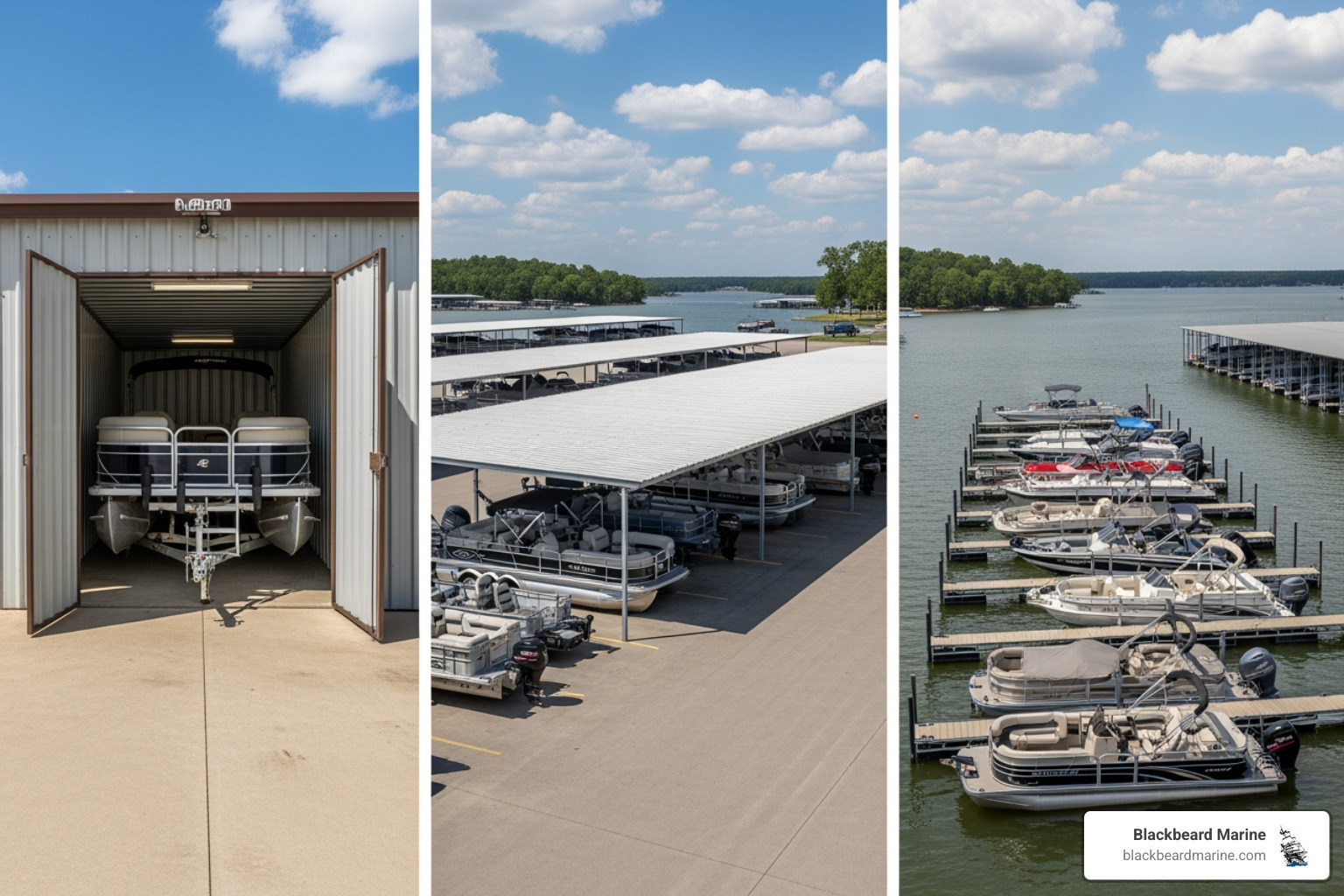
Indoor storage is the premium option, placing your boat in a fully enclosed building. It offers maximum protection from sun, hail, ice, theft, and pests.
Covered parking provides a solid roof to block sun, rain, and hail. It’s a popular mid-range choice, offering good protection at a more manageable price.
Uncovered outdoor storage is the most affordable option, where your boat sits in an open lot. It’s suitable for short-term storage, but a high-quality boat cover is essential to protect against the elements.
Marina slips are ideal for frequent boaters. Your G3 fishing boat or Lowe pontoon stays in the water at lakes like Texoma or Table Rock Lake, offering walk-on access. Marinas often provide amenities like fuel docks and ship stores.
Dry stack storage, found at marinas, stores your boat indoors on large racks. Staff use a forklift to launch your boat when you’re ready, combining indoor protection with on-water convenience.
Indoor vs. Outdoor Storage: A Protective Comparison
In Oklahoma, the choice between indoor and outdoor storage significantly impacts your boat’s longevity. Indoor storage offers complete protection. It blocks relentless summer sun that fades gel coat and cracks vinyl, prevents damage from severe hail, and keeps your boat safe from ice storms that can crack engine components. It’s also the most secure option against theft and keeps pests from nesting in your vessel.
Outdoor storage is less expensive but exposes your boat to the elements. Covered storage offers good protection from sun and precipitation, but your boat still faces temperature swings and humidity. Uncovered storage is the riskiest, leaving your boat completely exposed. If you choose this option, a durable cover is non-negotiable.
| Feature | Indoor Storage | Covered Outdoor Storage | Uncovered Outdoor Storage |
|---|---|---|---|
| Cost | Highest | Moderate | Lowest |
| Security | Excellent (enclosed, often alarmed) | Good (gated facility, surveillance) | Fair (gated facility, surveillance, but visible) |
| Weather Protection | Excellent (full protection from all elements) | Good (protection from sun, rain, hail) | Poor (fully exposed to all elements) |
| Pest Prevention | Excellent (enclosed, difficult for pests to enter) | Fair (some protection, but open to air) | Poor (easy access for pests) |
| Convenience | Generally good (can be less frequent access) | Excellent (easy in/out access) | Excellent (easiest in/out access) |
Marina Slips vs. Dedicated Storage Facilities
Choosing between a marina slip and a land-based facility depends on your boating habits. If you’re on the water every weekend, a marina slip offers best convenience. Your Lowe pontoon or Seaark fishing boat stays in the water, ready to go. Marinas at Lake Texoma and Table Rock Lake provide amenities like fuel docks, ship stores, and pump-out systems, making them a hub for avid boaters.
However, keeping a boat in the water exposes it to hull fouling and storm damage. For seasonal boaters or those who use their boat less frequently, a dedicated storage facility is often a better choice. Storing your G3 or Blazer Bay on land protects it from the issues of constant water exposure. These facilities focus on long-term security and protection, offering various unit sizes to fit your needs. For more tips, see this guide on how to store a boat.
Key Factors for Choosing the Right Boat Storage Oklahoma Facility
Selecting the right Boat Storage Oklahoma facility is about finding a secure, accessible, and well-maintained home for your boat. When we help customers, we recommend they prioritize these factors:
- Location: Proximity to your home or favorite lake, like Lake Texoma, to minimize travel time.
- Security: Non-negotiable features to protect your valuable asset. We’ll detail these below.
- Access Hours: Ensure the facility’s hours match your boating schedule, with 24/7 access being ideal for early morning trips.
- Unit Size: Measure your boat and trailer’s total length, width, and height to ensure a proper fit.
- Amenities: Look for extras like electrical hookups or wash-down areas that simplify boat ownership.
- Customer Service: A responsive staff can make your storage experience much smoother.
- Online Reviews: See what other boat owners are saying about a facility’s security, cleanliness, and service.
Essential Security Features to Look For
When storing your G3 or Lowe fishing boat, security is paramount. Look for facilities with multiple layers of protection:
- Gated Pin Code Access: Ensures only authorized individuals can enter, often with 24/7 access.
- 24/7 Video Surveillance: High-definition cameras deter criminals and monitor activity.
- High-Visibility Lighting: A well-lit facility is safer and less attractive to thieves.
- Perimeter Fencing: A sturdy fence is the first line of defense against unauthorized entry.
- On-Site Management: The presence of staff improves security and provides immediate assistance.
- Monitored Alarms: For indoor units, individual alarms offer an extra layer of protection.
- Individual Unit Locks: Use a strong, tamper-resistant lock on your enclosed unit.
Valuable Amenities That Make a Difference
Beyond security, certain amenities can significantly improve your Boat Storage Oklahoma experience.
- 24/7 Access: Provides the flexibility for early morning fishing or late-night cruises.
- Pull-Thru Units: Eliminates the stress of backing in a long boat and trailer.
- Electrical Hookups: Allows you to keep batteries charged or run a dehumidifier.
- On-Site Dump Stations: Useful for draining freshwater tanks on certain boats.
- Boat Wash Areas: Lets you rinse off lake grime before storing your vessel to prevent corrosion.
- Online Bill Pay: Offers a convenient way to manage your account and payments.
- Wide Driveways: Makes maneuvering your boat trailer safer and less stressful.
Preparing Your Boat for Oklahoma Storage
Proper preparation ensures your boat emerges from storage in the same condition it went in. Oklahoma’s climate extremes require a thorough approach to protect your Blazer Bay or G3 from heat, cold, and humidity, ensuring it’s ready for your next outing.
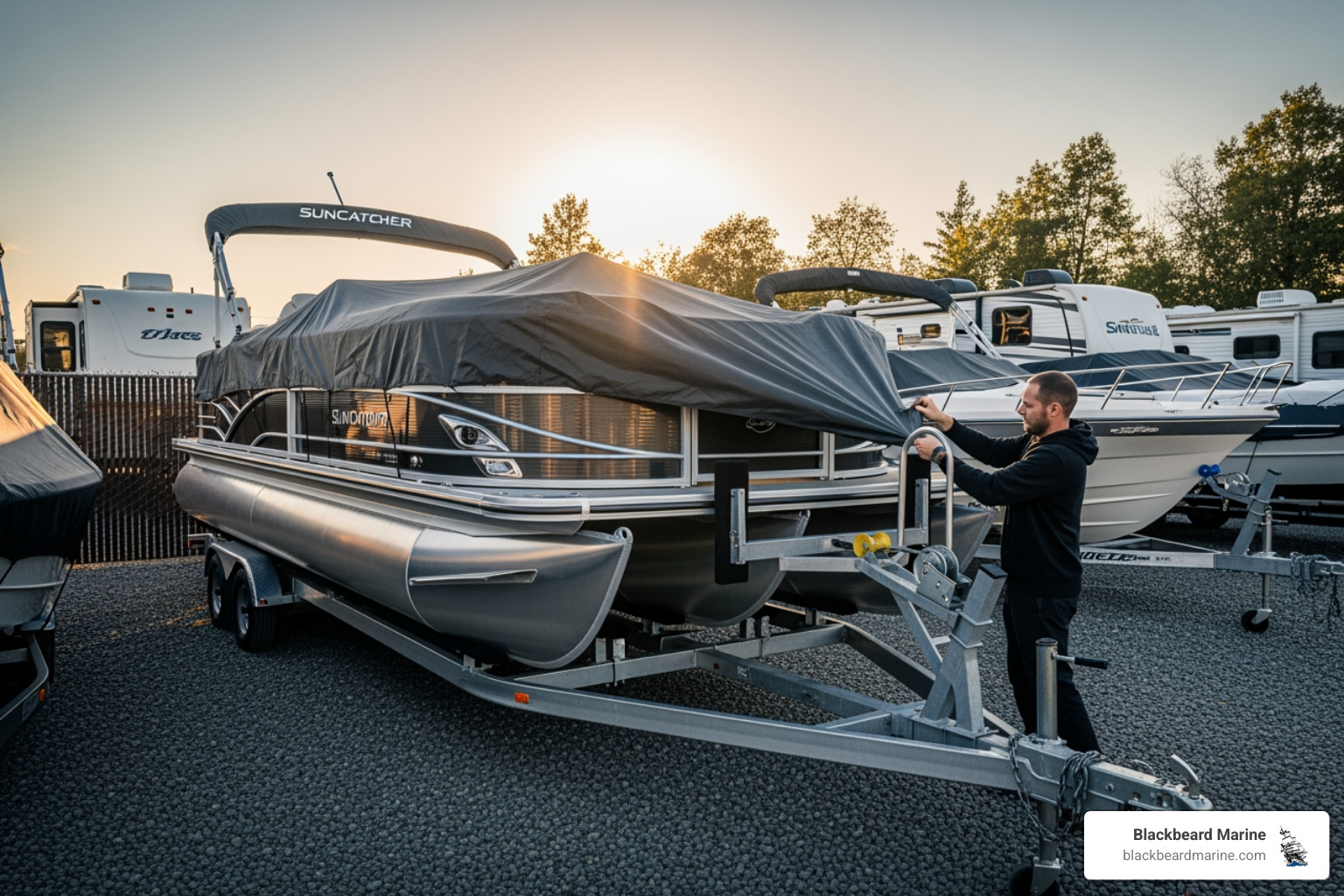
Seasonal preparation is crucial, especially as temperatures drop. Oklahoma’s violent weather—from ice storms to brutal summer sun—can damage an unprepared boat. Protecting your engine, hull, and interior from corrosion, fading, and mildew should be your top priority. A clean, dry, and properly serviced boat will weather storage far better and be ready for the water when you are.
Your Step-by-Step Boat Storage Oklahoma Prep Checklist
A thorough preparation protects your vessel and ensures a hassle-free start to the next boating season.
- Deep Clean: Wash the hull and interior to remove grime, algae, and anything that might attract pests. Don’t forget to clean and dry livewells.
- Drain Water Systems: This is critical for winter storage in Oklahoma. Drain the engine cooling system, freshwater tanks, and bilge to prevent freezing and cracking.
- Protect the Fuel System & Engine: Add a fuel stabilizer to the tank and run the engine to circulate it. Change the oil and filter to prevent damage from contaminated fluids.
- Maintain the Battery: Disconnect the battery, clean the terminals, and store it in a cool, dry place. Use a trickle charger to maintain its charge.
- Final Touches: Check trailer tire pressure and consider using blocks to relieve pressure. Use a high-quality, waterproof boat cover that fits snugly to protect against dust and scrapes, even indoors.
For more detailed guidance, explore our boat and RV storage services at Blackbeard Marine. We’re here to help you protect your investment.
Finding and Budgeting for Boat Storage in Oklahoma
Finding the right Boat Storage Oklahoma solution involves strategic searching and understanding the costs. Whether you’re near Lake Texoma, Table Rock Lake, or other popular waterways, a little research goes a long way.
Understanding and Budgeting for Storage Costs
The cost of boat storage in Oklahoma varies based on several key factors. The biggest impact on your monthly rate is the type of storage: indoor is the most expensive, followed by covered outdoor, with uncovered outdoor being the most budget-friendly. Size also matters; a large Suncatcher pontoon will cost more to store than a compact G3 fishing boat. Finally, location plays a role, with facilities near popular lakes like Lake Eufaula or in urban areas often charging more than rural ones.
When budgeting, ask about potential extra fees like administrative charges or security deposits. Also, factor in the cost of boat insurance, as most facilities require it and it’s essential for protecting your investment.
How to Find the Best Boat Storage Oklahoma Deals
Finding an affordable and secure spot for your Lowe or Skeeter boat is achievable with a smart approach.
- Use Online Directories: Websites like SelfStorage.com let you compare facilities, features, and prices in a given area.
- Visit Facility Websites: Get the most current information on availability and features directly from the source.
- Call for Quotes: Speaking directly with staff can uncover unadvertised specials and give you a feel for their customer service.
- Look for Promotions: Many facilities offer deals like the first month free or 50% off to new customers.
- Ask About Long-Term Discounts: If you’re storing for a full season or year, you can often get a reduced monthly rate.
Frequently Asked Questions about Oklahoma Boat Storage
We hear a lot of questions from boat owners looking for the perfect storage solution. Here are answers to the most common questions we get about Boat Storage Oklahoma.
Do I need special insurance for my stored boat in Oklahoma?
Yes, you should have dedicated boat insurance. A storage facility’s liability insurance typically covers their property, not yours. Your homeowner’s policy may offer limited coverage, but it’s often insufficient for a boat stored off-property. A dedicated boat insurance policy provides the best protection against theft, vandalism, fire, and weather-related damage. Most reputable facilities will require you to provide proof of insurance before renting a unit.
What size storage unit do I need for my fishing boat?
First, measure your boat and trailer’s total length, width, and height (including towers). For most G3, Lowe, Seaark, Skeeter, and Blazer Bay fishing boats, a 10×20 unit is a good fit. For larger Suncatcher or Lowe pontoon boats, you’ll likely need a 12×30, 12×40, or larger unit. Always confirm the unit’s door height to ensure clearance. When in doubt, choose a slightly larger size to make maneuvering easier and prevent accidental scrapes.
Are there specific regulations for storing a boat in Oklahoma?
While there are no overarching state laws for private boat storage, several rules apply. The facility’s contract is your primary guide, outlining payment terms, access, and what you can store. If you live in a community with a Homeowners Association (HOA), check their rules, as many restrict parking boats in driveways. City ordinances can also regulate boat parking on private property.
Finally, facilities have a list of prohibited items, typically including hazardous or flammable materials. Always communicate with your chosen facility to understand their specific policies and prepare your boat accordingly.
Conclusion: Keep Your Vessel Shipshape and Ready for Adventure
Your boat is your gateway to unforgettable weekends on Lake Texoma and peaceful sunsets on Table Rock Lake. Protecting that investment with the right Boat Storage Oklahoma solution is crucial. It’s about shielding your Skeeter fishing boat or Suncatcher pontoon from Oklahoma’s unpredictable weather, keeping it secure, and ensuring it’s always ready for your next adventure.
As we’ve covered, prioritizing weather protection, security features, and proper pre-storage preparation will ensure your boat emerges in pristine condition. Choosing between indoor, covered, or marina storage depends on your budget and how often you hit the water.
At Blackbeard Marine, we’re fellow boating enthusiasts who understand what your vessel means to you. With locations near Lake Texoma in Kingston, OK, and Table Rock Lake in Branson, MO, we’re right where the action is. We’re here to help you make the most of your boating lifestyle, from choosing the right boat to keeping it safe between outings.
Ready to find secure storage or explore our latest inventory? Explore our boat and RV storage solutions at Blackbeard Marine, or stop by one of our convenient locations. Your next adventure is waiting—let’s make sure your boat is ready for it.
